
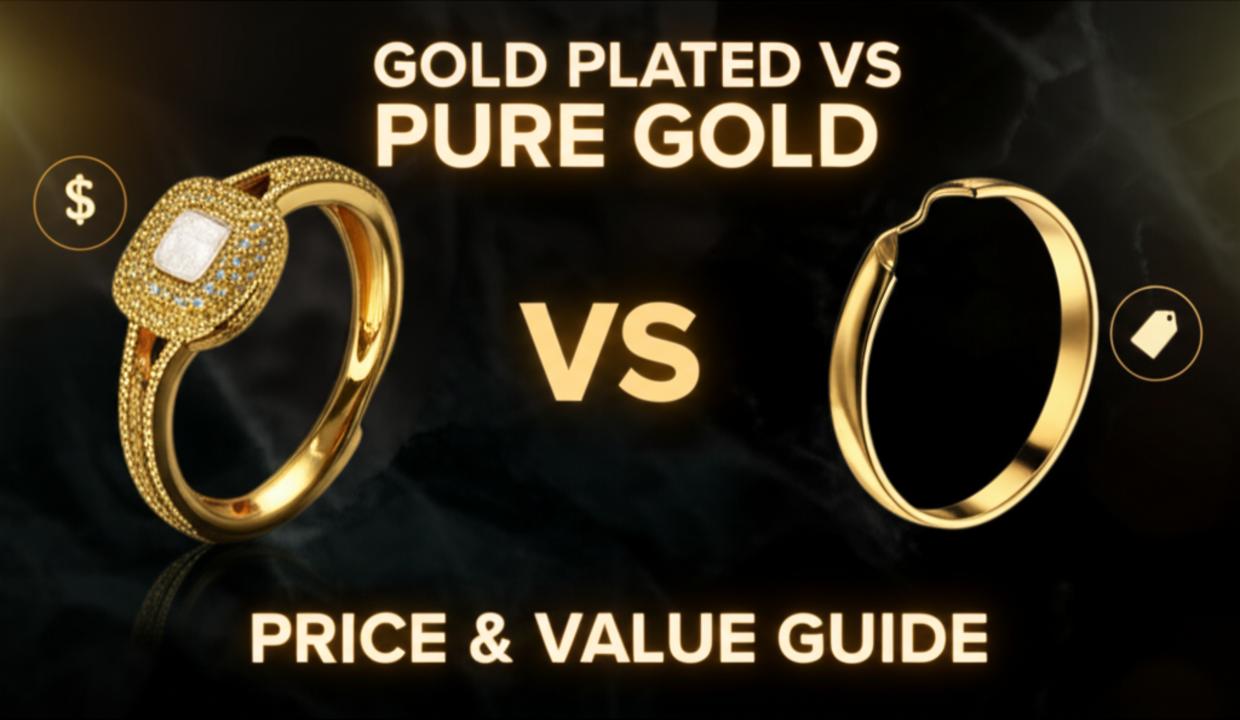
Choosing the perfect piece of jewelry involves more than just aesthetics; it’s about understanding value, durability, and your personal needs. For centuries, gold has captivated us with its timeless appeal. Yet, not all gold is created equal, especially when you’re looking at price tags today. The common dilemma often boils down to a fundamental comparison: gold plated vs pure gold.
This comprehensive guide will help you navigate the intricate world of gold jewelry, shedding light on the key differences between gold plated jewelry and solid gold options. We’ll delve into the nuances of purity, price points, longevity, and investment potential, ensuring you have all the information needed to make a smart purchase in 2024. Our aim is to provide a clear jewelry price guide, helping you distinguish between a temporary sparkle and a lasting heirloom.
Main Highlights: Jewellery Price Today: Gold Plated vs Pure Gold
The core distinction in jewelry price today between gold-plated and pure gold pieces lies directly in their material composition. Gold-plated jewelry is significantly more affordable because it features only a very thin layer of gold, which is electrically applied onto a base metal. Think of it as a golden skin over a less valuable core.
Conversely, pure (solid) gold jewelry is crafted from substantial amounts of actual gold, measured in karats. Common purities include 10K, 14K, 18K, or even pure 24K gold. This fundamental difference in gold content dictates everything from initial cost to long-term value and durability.
Understanding Gold Purity: The Karat System Explained
When we talk about pure gold, we refer to its fineness, expressed in karats (K). 24K gold is considered 100% pure, meaning it contains 24 parts gold out of 24 total parts. While beautiful, 24K gold is exceptionally soft and prone to scratching and bending, making it impractical for everyday wear in most jewelry. Therefore, jewelers often alloy pure gold with other metals like copper, silver, or zinc to increase its strength and durability.
This alloying process gives rise to different karat values:
- 18K Gold: Contains 75% pure gold and 25% other metals. It strikes an excellent balance between purity, durability, and a rich golden color, making it a popular choice for fine jewelry.
- 14K Gold: Made of 58.3% pure gold and 41.7% other metals. It’s harder and more resistant to wear than 18K gold, making it ideal for daily use, engagement rings, and intricate designs.
- 10K Gold: The lowest karatage considered real gold in many countries, containing 41.7% pure gold and 58.3% other metals. It is the most durable and affordable solid gold option, though its color may appear slightly less vibrant than higher karats.
The higher the karat number, the higher the gold content, and typically, the higher the pure gold price.
Deconstructing Gold Plating: More Than Just a Shine
Gold-plated jewelry offers the coveted aesthetic of gold without the hefty price tag. But how is it made? This type of jewelry involves a process called electroplating, where a microscopically thin layer of gold is deposited onto a base metal. Common base metals include brass, copper, nickel, or silver.
The gold layer on plated items is incredibly thin, usually ranging from about 0.5 to 2.5 microns (a micron is one-millionth of a meter). To put that into perspective, a human hair is roughly 70 microns thick! This minimal use of actual gold is the primary reason for the significant cost difference when you compare gold plated vs pure gold. It’s a clever way to achieve the appearance of luxury without the intrinsic value.
The Price Divide: Gold Plated vs Pure Gold – A Detailed Look
When exploring the jewelry price guide, the cost divergence between these two categories is profound. Pure gold prices are intricately linked to global market gold rates, which fluctuate daily, and the karat value (purity) of the specific piece. For instance, a single gram of 18K solid gold jewelry can currently cost anywhere from $45 to $55 or more, depending on prevailing market rates and the intricacy of the design and craftsmanship.
Higher purity gold, such as 24K, commands an even higher price per gram due to its greater gold content. However, as noted earlier, its softness makes it less practical for durable jewelry. You’re paying for the substantial material value. To understand more about the differences between solid gold and gold plated, it’s essential to recognize this material cost component. For further reading, explore articles that delve into these distinctions.
In stark contrast, gold-plated jewelry costs only a fraction of solid gold. Since it uses merely a microscopically thin layer of gold, the material cost is negligible. The price of gold-plated items largely reflects the cost of the base metal, manufacturing, and design, rather than the gold content itself. This makes gold-plated pieces highly accessible and budget-friendly, ideal for fashion-conscious buyers or those looking for trendy accessories without a significant financial commitment.
Durability and Longevity: How Long Will Your Shine Last?
Beyond the initial purchase price, a critical factor in your gold jewelry comparison should be durability and how long your jewelry will maintain its appearance. Pure gold jewelry, especially in 14K or 18K, is remarkably long-lasting. It resists tarnish, won’t change color, and can endure years of wear with proper care. It is also inherently hypoallergenic, making it a safe choice for sensitive skin types.
On the other hand, gold-plated jewelry has a limited lifespan. The thin gold layer is susceptible to wear and tear, eventually rubbing off to expose the base metal underneath. This process can take anywhere from a few months to a couple of years, depending on factors like frequency of use, individual skin chemistry, and exposure to chemicals such as perfumes, lotions, and cleaning agents. Once the plating wears off, the piece loses its gold aesthetic. While replating is possible, it requires professional service and adds to the overall cost, making it less practical for long-term wear compared to solid gold.
Investment Value: Is Your Jewelry an Asset or an Accessory?
When considering gold jewelry comparison, the investment potential is a significant differentiator. Pure gold jewelry is often considered a tangible asset and a form of investment. Its value can appreciate over time, in line with the global market price of gold. Should you ever decide to sell, your solid gold pieces retain a substantial portion of their intrinsic worth based on their gold content. This makes them not just beautiful accessories but also valuable heirlooms that can be passed down through generations, holding both sentimental and financial worth.
In contrast, gold-plated jewelry holds no intrinsic investment value. The negligible amount of gold means that once the plating wears off or the piece loses its appeal, its resale value is virtually non-existent. You are essentially paying for the design and the temporary aesthetic, not for the underlying precious metal. It serves purely as a fashion accessory rather than a financial asset, which is a crucial point in any comprehensive jewelry price guide. Understanding the gold economies can illuminate these distinctions further.
Appearance and Aesthetic Appeal: Telling Them Apart
At first glance, it can be challenging to tell the difference between gold-plated jewelry and pure gold. Gold plating is designed to perfectly mimic the luxurious appearance of solid gold, offering the same lustrous finish and color. This makes it an excellent choice for achieving a high-end look at a fraction of the cost, making it perfect for experimenting with top summer 2025 jewelry trends without a major investment. You can find more about these trends at South Hills Jewelers.
However, subtle differences can emerge over time. Pure gold jewelry often has a richer, deeper hue, and a noticeable weight due to its substantial gold content. It also develops a unique patina over decades, adding to its character. Gold-plated items, while initially identical in appearance, may eventually show signs of wear, discoloration, or dullness as the thin gold layer diminishes. Learning how to spot the differences between gold plated and solid gold can save you from misidentification.
Beyond Plated and Pure: Other Gold Jewelry Types to Know
While gold plated vs pure gold is the primary comparison, it’s worth noting other types of gold jewelry that fall in between these two extremes. Understanding these can further refine your jewelry price guide knowledge:
| Type | Gold Content | Durability | Price Range | Investment Value |
|---|---|---|---|---|
| Solid Gold | 10K to 24K (up to 100% gold) | Very durable, long-lasting | Highest, fluctuates with gold price | High – holds or increases value |
| Gold-Filled | Thick layer ≥5% gold by weight | More durable than plated | Mid-range | Moderate – better than plated |
| Gold-Plated | Very thin gold layer (microns) | Least durable, wears off | Lowest | None – no resale value |
Gold-filled jewelry stands out as an excellent mid-range option. Unlike plating, which is a microscopically thin layer, gold-filled items have a much thicker layer of gold mechanically bonded to a base metal core. This layer constitutes at least 5% of the item’s total weight, making it significantly more durable and less prone to tarnishing than gold-plated jewelry. It offers a good balance of durability and affordability, often lasting for many years with proper care.
Choosing Your Gold: Use Cases and Practical Considerations
The choice between gold plated vs pure gold ultimately depends on your priorities, budget, and intended use. Here’s a breakdown to help you decide:
- Opt for Pure Gold If: You desire an heirloom piece, value long-term durability, have sensitive skin (as it’s hypoallergenic), consider the jewelry an investment, or wear your jewelry daily. While the pure gold price is higher, its longevity and value justify the cost.
- Choose Gold-Plated If: You’re on a tighter budget, want to experiment with trendy styles without a major commitment, need jewelry for occasional wear, or simply love the look of gold without the investment aspect. It’s perfect for fashion-forward individuals who update their accessories frequently.
- Consider Gold-Filled If: You want something more durable than plated but less expensive than solid gold. It’s an ideal compromise for pieces you want to wear often without the immediate worry of wear-through that comes with plated jewelry.
Understanding these use cases is key to making a truly informed decision about your gold jewelry comparison.
Pros and Cons: Gold Plated vs. Pure Gold Jewelry
| Pros | Cons |
|---|---|
| Pure Gold: Exceptional durability and longevity. | Pure Gold: Highest initial cost. |
| Pure Gold: Hypoallergenic, safe for sensitive skin. | Pure Gold: Softer (especially 24K), more prone to scratches. |
| Pure Gold: Holds and can increase in value, acts as an investment. | Pure Gold: Price fluctuates with market rates. |
| Pure Gold: Retains its rich color and luster indefinitely. | Pure Gold: Heavier, might not be preferred by all for certain designs. |
| Gold-Plated: Highly affordable, budget-friendly. | Gold-Plated: Limited durability; gold layer wears off over time. |
| Gold-Plated: Allows for frequent style changes. | Gold-Plated: No intrinsic investment or resale value. |
| Gold-Plated: Mimics the look of solid gold perfectly. | Gold-Plated: Can cause skin irritation or discoloration for some due to base metals. |
| Gold-Plated: Lightweight and comfortable for many. | Gold-Plated: Requires careful handling and avoidance of chemicals. |
Frequently Asked Questions (FAQ)
- How can I tell the difference between gold plated and pure gold jewelry?
Often, pure gold jewelry will have a hallmark indicating its karat (e.g., 10K, 14K, 18K, or 24K). Gold-plated items might be marked “GP,” “HGE,” or “GF” (for gold-filled, which is different). Pure gold feels heavier for its size. Over time, worn plating reveals the base metal, which is a clear indicator.
- Can gold-plated jewelry be re-plated?
Yes, gold-plated jewelry can be re-plated by a professional jeweler. However, the cost of re-plating can sometimes be significant relative to the initial purchase price of the piece, especially for inexpensive items. It’s often considered for sentimental pieces.
- Is gold-plated jewelry hypoallergenic?
Typically, no. While the outer layer is gold, the base metal (often copper, nickel, or brass) can cause allergic reactions or skin discoloration for individuals with sensitivities. Pure gold (especially 14K and above) is generally hypoallergenic.
- What is the best karat for everyday gold jewelry?
For everyday wear, 14K gold is often recommended. It offers an excellent balance of durability, resistance to scratches, and a beautiful gold color. It’s more resilient than 18K or 24K, while still maintaining a significant gold content and rich appearance.
- Does gold-plated jewelry tarnish?
The thin gold layer itself doesn’t tarnish, as gold is a non-reactive metal. However, the base metal underneath can tarnish, and this tarnish can migrate through the thin gold layer or become visible as the plating wears off. Exposure to moisture, chemicals, and perfumes accelerates this process.
For a Visual Guide: Watch This Video!
For an even more detailed and visual explanation, we highly recommend watching the latest 2025 video from South Hills Jewelers on YouTube. Titled “Solid Gold vs Gold-Filled vs Gold-Plated Jewelry Explained,” it provides a clear, concise comparison covering price, durability, and essential purchase tips that complement this guide beautifully.
Conclusion: Making Your Golden Choice
Navigating the world of jewelry prices today, particularly the distinction between gold plated vs pure gold, requires a clear understanding of what you’re buying. Solid gold jewelry stands as a testament to enduring value, offering unparalleled durability, hypoallergenic properties, and the potential for appreciation over time. It’s an investment in a piece that can last lifetimes.
Conversely, gold-plated jewelry provides an accessible entry point into the aesthetics of gold. It’s a cost-effective solution for fashion, allowing you to enjoy the look without the significant financial commitment. However, it comes with a limited lifespan and no lasting financial value. The choice is yours, based on your budget, how you intend to wear the piece, and your long-term expectations.
We hope this detailed jewelry price guide helps you make an informed decision for your next purchase. Share your thoughts in the comments below, or feel free to contact us for more insights! You can also learn more about us and our commitment to helping you make wise jewelry choices. #GoldJewelry #JewelryGuide
Disclaimer: All images and videos are sourced from public platforms like Google and YouTube. If any content belongs to you and you want credit or removal, please inform us via our contact page.