
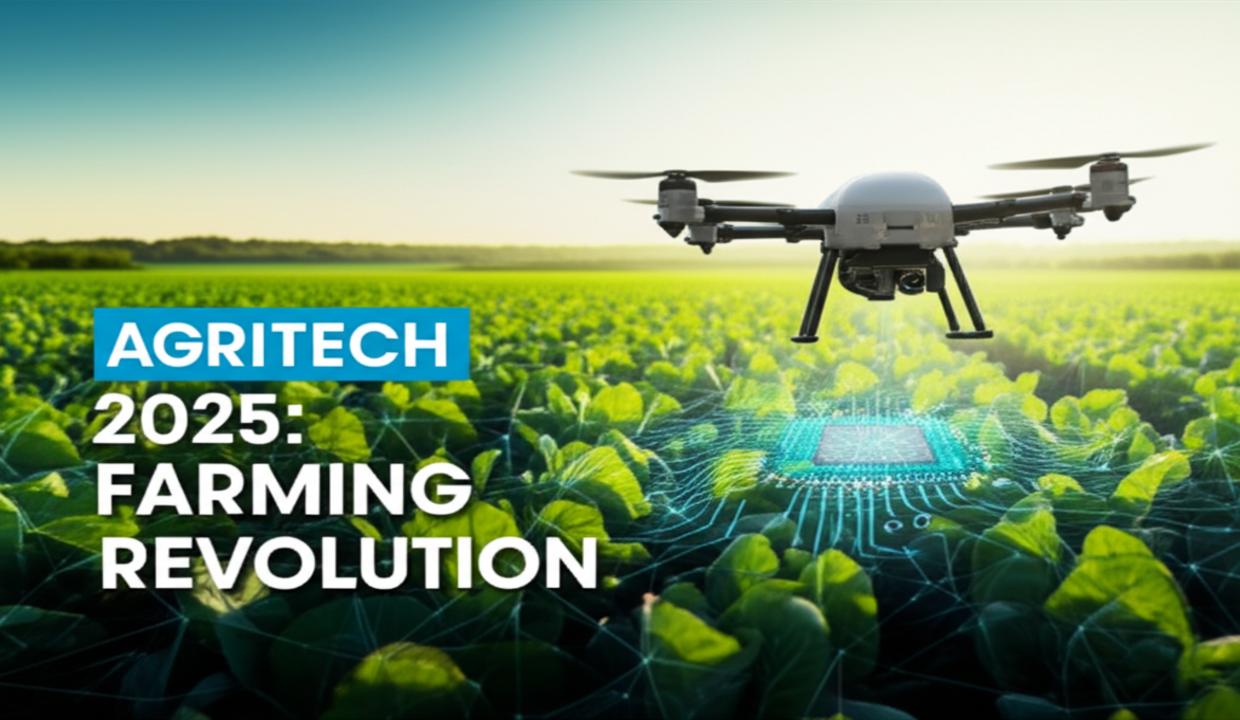
Welcome to the forefront of agricultural innovation! As we step into 2025, the world of farming is undergoing a profound transformation, driven by groundbreaking advancements in technology. We’re witnessing a pivotal shift towards smarter, more sustainable, and incredibly efficient agricultural practices, collectively known as AgriTech. This isn’t just about incremental changes; it’s about a revolution powered by data, automation, and a deep understanding of our planet’s needs.
The global demand for food continues to rise, yet resources are finite and climate challenges are ever-present. This makes the evolution of agriculture technology 2025 not just beneficial, but absolutely essential. From the smallest family farms to the largest agricultural enterprises, new tools and methodologies are emerging to help growers optimize every aspect of their operations, ensuring both productivity and planetary health.
In this comprehensive guide, we’ll dive deep into the most impactful agritech trends shaping the future of farming in 2025. We’ll explore how cutting-edge innovations like drones in agriculture and sophisticated IoT farming systems are redefining what’s possible, paving the way for truly smart farming solutions that are sustainable, resilient, and remarkably productive.
Top AgriTech Trends Transforming Farming in 2025
The agricultural landscape in 2025 is characterized by a dynamic interplay of several key technological and methodological advancements. These trends are not isolated but rather interconnected, forming a powerful ecosystem designed to address the complex challenges of modern food production.
AI and Precision Agriculture: The Brains Behind the Farm
Artificial intelligence (AI) is no longer a futuristic concept; it’s the intelligent core of precision agriculture. In 2025, AI is empowering farmers with unprecedented insights, turning vast amounts of raw data into actionable intelligence. This is achieved by analyzing real-time information gathered from an array of sources, including advanced sensors embedded in the soil, sophisticated drones in agriculture, and high-resolution satellite imagery.
AI-driven systems optimize every stage of the farming cycle. They can precisely recommend where to plant, how much to irrigate, and exactly when to apply pest management solutions. This meticulous approach significantly boosts crop yields while simultaneously reducing the need for costly inputs like water, fertilizers, and pesticides. The result is a more efficient system with a minimized environmental footprint. Furthermore, AI-enabled predictive analytics provide farmers with the foresight needed to make data-driven decisions, enhancing resource efficiency and overall crop performance.
Regenerative and Climate-Smart Agriculture: Healing the Earth
Beyond maximizing yields, a significant shift in AgriTech Trends 2025 is the widespread adoption of practices that actively improve the health of our planet. Regenerative agriculture is at the forefront of this movement. Methods such as no-till farming, planting diverse cover crops, and integrating agroforestry techniques are gaining immense traction.
These practices are designed to restore soil health, enhance biodiversity, and crucially, sequester carbon from the atmosphere. They are increasingly supported by governmental subsidies and a growing consumer demand for sustainably produced goods. Complementing this, climate-smart agriculture equips farmers with strategies to adapt to unpredictable weather patterns and manage resource constraints more effectively, building a more resilient food system for the future. You can learn more about these critical shifts in agricultural practices by exploring resources like key agrotech trends.
Biotechnology and Advanced Breeding: Resilient Crops for a Changing World
Innovation in agricultural biotechnology is making crops more robust and resilient than ever before. In 2025, breakthroughs include the development of microbial solutions that enhance plant growth and protect against diseases, along with advanced breeding techniques that improve crop resistance to pests, pathogens, and environmental stresses like drought or extreme temperatures. These scientific advancements are crucial for ensuring food security in a rapidly changing climate.
Beyond traditional crop improvement, precision fermentation is expanding its reach. While initially known for alternative proteins, this technology is now being utilized to produce specialized ingredients such as flavorings and bioactives. This innovative approach offers sustainable and efficient ways to create valuable food components, further addressing global food security and sustainability challenges.
Digital Agriculture and Automation: The Connected Farm
The growth of the global digital agriculture market in 2025 is nothing short of explosive, projected to expand at over 9% annually. This surge is fueled by the widespread integration of interconnected technologies that define IoT farming and truly exemplify smart farming. We’re talking about a comprehensive ecosystem of IoT sensors, advanced robotics, automated control systems, and sophisticated farm management software.
Automation is revolutionizing labor management by reducing manual needs and significantly improving operational accuracy. These systems enable real-time monitoring of critical factors like soil moisture, water levels, and crop health. This constant flow of data empowers farmers to optimize production cycles and streamline supply chains, leading to unprecedented levels of efficiency and productivity. For further insights into how these digital innovations are shaping the industry, consider reading about farming trends to watch in 2025.
Resource Efficiency and Sustainability Focus: Doing More With Less
Sustainability is no longer a buzzword; it’s a fundamental principle guiding agricultural development in 2025. A strong emphasis is being placed on maximizing resource efficiency across the board. This includes innovative water management strategies, such as smart irrigation systems powered by AI that deliver water precisely where and when it’s needed, drastically reducing waste.
Carbon utilization initiatives are gaining traction, aiming to capture and repurpose carbon emissions within agricultural processes. Furthermore, there’s a significant drive towards the valorization of agricultural side-streams. This means finding new, valuable uses for what were once considered waste products. For instance, repurposing brewing byproducts into novel proteins is a prime example of this circular economy approach. These models are not just environmentally responsible but also contribute significantly to the economic viability of modern agriculture.
Vertical and Indoor Farming Expansion: Bringing the Farm to the City
With increasing urbanization and concerns over land scarcity, vertical and indoor farming are experiencing a rapid expansion. This growing interest, particularly in urban environments, addresses challenges related to land availability and enhances supply chain resilience. By enabling year-round production under highly controlled conditions, these methods offer a compelling solution for sustainable food systems.
Vertical farms, often situated in city centers, minimize transportation costs and environmental impact, delivering fresh produce directly to consumers. This controlled environment agriculture also allows for optimized resource use, further cementing its place as a key component of future AgriTech solutions.
The Power of Drones and IoT in Smart Farming
It’s impossible to discuss smart farming and agriculture technology 2025 without highlighting the pivotal roles of drones in agriculture and IoT farming. These two technologies often work in tandem, forming the eyes and ears, and even the hands, of the modern farm.
Drones in agriculture provide unparalleled aerial insights. Equipped with multispectral, thermal, and high-resolution cameras, they can quickly map vast fields, identify areas of stress, monitor crop health, and even assess nutrient deficiencies long before they are visible to the naked eye. This data feeds into AI systems, allowing for precise interventions, such as targeted spraying of pesticides or fertilizers, which saves resources and minimizes environmental impact. Drones are also increasingly used for planting, livestock monitoring, and even pollination.
IoT farming, on the other hand, creates a network of interconnected devices that collect and transmit real-time data from the ground up. Soil sensors measure moisture, pH, and nutrient levels. Weather stations provide hyper-local forecasts. Livestock trackers monitor animal health and location. All this data flows into a central farm management system, often cloud-based, allowing farmers to monitor conditions remotely and make informed decisions on the go. This level of connectivity transforms traditional farms into intelligent, responsive ecosystems.
Together, drones and IoT embody the essence of smart farming, enabling a level of precision, automation, and data-driven decision-making that was once unimaginable. They are fundamental to the success of all the agritech trends discussed, from precision agriculture to resource efficiency. For more trending topics in agriculture for the coming year, a good resource would be hot topics in agriculture 2025.
What’s New in 2025?
The year 2025 marks a significant convergence in AgriTech. It’s not just about new individual technologies, but how they are integrating to create comprehensive, synergistic solutions. The focus is heavily on interoperability and seamless data flow between different systems.
We’re seeing advanced robotics becoming more common for tasks beyond simple harvesting, like precise weed control and autonomous planting. Predictive analytics are more sophisticated, using historical weather data and AI models to forecast crop yields and potential disease outbreaks with remarkable accuracy. Furthermore, the push for circular economy models, where agricultural waste is seen as a valuable resource, is moving from niche applications to mainstream adoption, driven by both economic incentives and environmental imperatives. These developments collectively enhance the promise of future-proof agriculture. Discover more about the overall AgriTech market overview and trends for the next few years at Agritech Market Overview and Trends for 2025-2030.
Pros and Challenges of Adopting AgriTech in 2025
Embracing the advancements in agriculture technology 2025 offers numerous advantages, but like any significant transformation, it comes with its own set of considerations.
| Pros | Challenges |
|---|---|
| Significantly increased crop yields and productivity. | High initial investment costs for new technologies. |
| Reduced input costs (water, fertilizer, pesticides). | Need for specialized skills and training for farmers. |
| Enhanced environmental sustainability (soil health, carbon sequestration). | Data privacy and security concerns. |
| Improved resilience to climate change and extreme weather. | Internet connectivity issues in rural areas. |
| Better decision-making through real-time data and AI. | Complex integration of various tech systems. |
| Reduced labor demands and increased operational efficiency. | Resistance to change and adoption barriers. |
Watch More in This Video
For a deeper dive into these transformative technologies and to see them in action, check out this insightful video:
Note: The specific video *”Top AgriTech Trends Transforming Farming in 2025″* was mentioned as published in July 2025. Please replace “YOUR_YOUTUBE_VIDEO_ID” with the actual embed code for this video once available.
FAQ About AgriTech Trends in 2025
-
What is the primary goal of AgriTech in 2025?
The primary goal of AgriTech in 2025 is to create more sustainable, productive, and resilient food systems. This is achieved by leveraging technology to optimize resource use, reduce environmental impact, and enhance agricultural output while adapting to climate challenges and meeting global food demand.
-
How do drones contribute to smart farming?
Drones in agriculture are crucial for smart farming by providing high-resolution aerial data. They can monitor crop health, identify pests, assess irrigation needs, and even apply targeted treatments, leading to more efficient resource management and healthier crops. Their ability to cover large areas quickly makes them invaluable.
-
What is IoT farming?
IoT farming refers to the use of interconnected sensors, devices, and machinery that collect and exchange real-time data across a farm. This data allows farmers to monitor and control various aspects, such as soil conditions, livestock health, and equipment performance, remotely and with high precision, optimizing operations.
-
Why is regenerative agriculture a key trend?
Regenerative agriculture is a key trend because it focuses on restoring and enhancing natural ecosystems within farming. Practices like no-till and cover cropping improve soil health, increase biodiversity, and sequester carbon, offering long-term environmental benefits and building more resilient agricultural systems that are less reliant on external inputs.
-
Will AgriTech make farming completely automated?
While AgriTech, including robotics and AI, is significantly increasing automation in farming by 2025, it’s not expected to lead to complete human exclusion. Instead, it aims to augment human capabilities, allowing farmers to focus on higher-level decision-making and strategic management, while repetitive or physically demanding tasks are handled by technology. For more detailed insights into these emerging trends, check out Agrifood Tech Trends 2025.
Conclusion: The Future of Farming is Here
The year 2025 truly marks a pivotal moment for agriculture. The convergence of AI-driven precision agriculture, sustainable regenerative practices, advanced biotechnology, and widespread digital automation is not just transforming how we grow food; it’s redefining our relationship with the land itself. These agritech trends empower farmers and agribusinesses to sustainably intensify production, adapt to pressing climate challenges, and effectively meet the ever-growing global food demand.
The era of smart farming, propelled by innovations like drones in agriculture and intricate IoT farming systems, promises a future where efficiency, sustainability, and productivity go hand-in-hand. It’s an exciting journey towards a more secure and environmentally responsible food future. #AgriTech #SmartFarming #FutureOfAgriculture
What are your thoughts on these groundbreaking trends? Share your insights and comments below! To learn more about our mission and expertise, please visit our About Us page, or feel free to Contact us with any inquiries.
Disclaimer: All images and videos are sourced from public platforms like Google and YouTube. If any content belongs to you and you want credit or removal, please inform us via our contact page.