
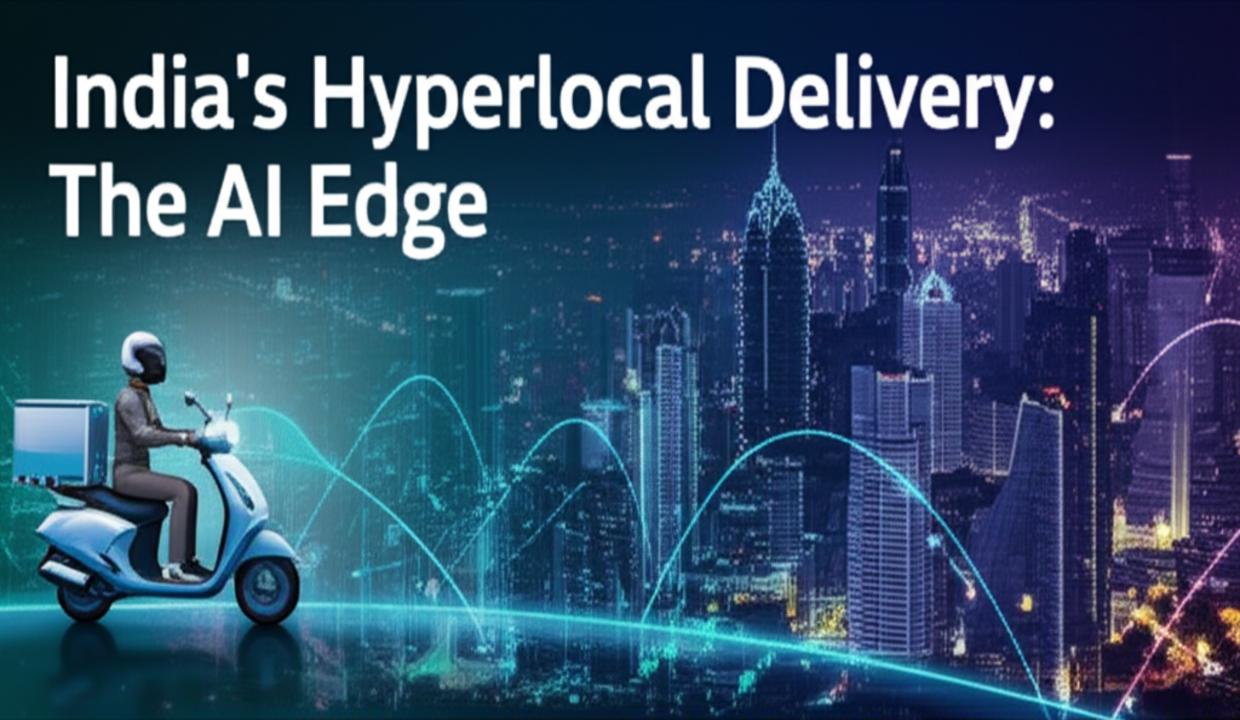
India’s bustling urban centers present a unique challenge and opportunity for the logistics sector. With millions of consumers relying on quick commerce and doorstep services, the demand for instant gratification has fueled the boom of hyperlocal delivery. This is where cutting-edge technology steps in. Artificial intelligence, or AI, is not just a buzzword; it is the backbone of modern hyperlocal delivery operations in India, transforming how goods move from seller to buyer at unprecedented speeds.
Our article explores the pivotal role of AI in hyperlocal delivery across the Indian landscape. We will delve into how AI-driven solutions are optimizing every aspect of the supply chain, from predicting demand to navigating complex city traffic, ensuring your parcels arrive swiftly and reliably. Join us as we uncover the innovations making lightning-fast delivery a reality for millions.
The AI Revolution in Indian Hyperlocal Delivery
The concept of delivering goods within a very limited geographical area, often within a few kilometers, is what we call hyperlocal delivery. In India, this model is crucial for everything from groceries and medicines to restaurant meals. However, managing these operations efficiently amidst dense populations, diverse road conditions, and unpredictable demand requires more than just human effort.
This is where logistics AI India truly shines. AI technologies provide the intelligence needed to tackle these complexities head-on, turning logistical nightmares into streamlined processes. The synergy between AI and hyperlocal delivery is transforming the customer experience, making it faster, more reliable, and increasingly personalized.
Unpacking the Core: How AI Powers Hyperlocal Delivery
AI’s influence permeates nearly every facet of hyperlocal delivery. It acts as an intelligent layer, enhancing traditional logistics methods with predictive capabilities and automation. These core applications are critical for maintaining the rapid delivery times consumers now expect.
- Optimized Route Planning: Imagine trying to find the quickest path through a city like Mumbai during peak hours. AI-powered route optimization uses sophisticated machine learning algorithms to calculate the most efficient delivery routes in real-time. It considers dynamic factors such as traffic congestion, weather conditions, road closures, and even local events. This capability is vital for meeting the stringent 10-60 minute delivery promises of hyperlocal services. Businesses leveraging AI-powered routing for hyperlocal delivery see significant reductions in travel time and fuel costs.
- Precision Demand Forecasting: Predicting what customers will want and when they will want it is a game-changer, especially for perishable goods. AI analyzes historical sales data, seasonal trends, local festivals, and even micro-market fluctuations to forecast demand with high accuracy. This allows businesses to optimize inventory levels, minimizing overstocking and reducing waste, which is particularly beneficial for fresh produce and dairy products.
- Smart Inventory Management: Closely tied to demand forecasting, AI helps manage inventory by suggesting optimal stocking levels for various products across different micro-warehouses or dark stores. This ensures products are available close to the customer, ready for immediate dispatch, thereby reducing last-minute fulfillment issues.
- Personalized Customer Experiences: AI analyzes individual purchase patterns and preferences to offer tailored product recommendations and promotions. For services like farm-to-table deliveries or online grocery stores, this not only enhances customer engagement but also boosts sales by suggesting items customers are more likely to buy. Discover more about the role of AI in farm-to-table delivery apps.
- Automated Quality Control: Ensuring product quality before dispatch is paramount, especially for food and sensitive items. AI-powered inspection tools, often using cameras with image recognition capabilities, can quickly assess product freshness and integrity, guaranteeing customers receive only high-quality goods. This reduces returns and improves customer satisfaction significantly.
- Real-Time Tracking and Transparency: For consumers, knowing where their order is at all times builds trust. AI facilitates seamless real-time shipment monitoring and provides precise delivery status updates. This level of transparency improves overall supply chain visibility, benefiting both the customer and the delivery provider. It’s a core aspect of modern AI-powered logistics systems.
- Workforce Management and Automation: AI supports agile deployment of delivery personnel, optimizing their schedules and assignments based on real-time demand and route efficiency. Furthermore, AI-driven automation in warehouses helps in quicker sorting and packing, boosting operational efficiency and driving down labor costs.
Enhancing Efficiency: AI’s Impact on Last-Mile Logistics
The “last mile” is often the most challenging and costly part of the delivery process. It involves navigating the final leg from a distribution hub to the customer’s doorstep. This is precisely where AI in last mile delivery makes its most significant impact, turning potential bottlenecks into smooth, efficient operations.
By constantly analyzing data streams, AI systems can dynamically adjust to unforeseen circumstances. A sudden road closure? AI instantly reroutes. A spike in orders in a particular locality? AI quickly reassigns delivery agents. This adaptability is critical for maintaining the promised speed and reliability of hyperlocal services, ensuring customer delight and operational scalability. It’s the smart way to handle urban logistics.
Pioneering the Future: Advanced AI Technologies in India
The application of AI in logistics is not static; it is constantly evolving. In India, while some advanced technologies face regulatory hurdles, pioneering companies are already experimenting with the next wave of innovation.
- Autonomous Vehicles and Drones: Although still in nascent stages due to regulatory challenges, companies like Zomato and Dunzo have conducted pilots for drone delivery, aiming to further reduce delivery times and revolutionize last-mile logistics. These innovations promise to bypass traditional traffic woes and deliver goods even faster.
- AI-Powered Chatbots: Enhancing customer service is another crucial area where AI makes a difference. Intelligent chatbots, powered by natural language processing (NLP), provide 24/7 customer support. They can promptly resolve queries related to order tracking, returns, and general inquiries, reducing the load on human customer service agents and improving overall customer satisfaction. This is a key part of leveraging AI in logistics for smarter consumerism.
These advanced technologies highlight the transformative potential of hyperlocal tech in India’s logistics sector, promising a future where deliveries are not just fast but also incredibly smart and efficient. The continuous innovation in this space is crucial for meeting the demands of India’s rapidly expanding digital economy.
Staying Ahead: What’s New in Hyperlocal AI for 2025?
Looking ahead to 2025, the evolution of AI hyperlocal delivery in India is set to accelerate. The latest trends indicate a stronger reliance on sophisticated big data analytics and advanced machine learning models. Platforms are becoming even more adept at processing vast amounts of real-time data to optimize every logistical parameter.
This includes more granular control over delivery routes, dynamic pricing based on demand, and even predictive maintenance for delivery vehicles. The focus remains squarely on reducing delivery times and operational costs while elevating the consumer experience through unmatched speed and convenience. Expect to see AI-driven solutions become even more integrated into the urban fabric, making deliveries almost instantaneous.
Navigating the Landscape: Pros and Cons of AI in Hyperlocal Delivery
| Pros | Cons |
|---|---|
| Significantly reduces delivery times (10-60 minutes). | High initial investment in AI infrastructure and talent. |
| Optimizes routes, reducing fuel consumption and operational costs. | Requires vast amounts of high-quality data for effective training. |
| Improves inventory management, minimizing waste and spoilage. | Potential job displacement for some manual roles in logistics. |
| Enhances customer satisfaction through personalization and transparency. | Complex integration with existing legacy systems. |
| Enables scalability to meet fluctuating demand. | Ethical considerations around data privacy and algorithmic bias. |
| Boosts overall operational efficiency and resource utilization. | Dependency on reliable internet and power infrastructure. |
FAQs: Understanding AI in Indian Logistics
-
What is hyperlocal delivery and why is AI important for it in India?
Hyperlocal delivery involves delivering goods within a small geographical radius, usually in minutes or hours. AI is crucial in India due to dense urban environments, unpredictable traffic, and the need for rapid service. It optimizes routes, manages inventory, and forecasts demand, making speedy delivery feasible and cost-effective for businesses operating in a complex market.
-
How does AI optimize delivery routes in congested Indian cities?
AI utilizes machine learning algorithms to analyze real-time data on traffic, weather, road closures, and demand patterns. It calculates the fastest and most efficient routes for delivery agents, dynamically adjusting to changes. This significantly reduces travel time, cuts down on fuel consumption, and helps meet tight delivery deadlines even in heavily congested areas.
-
Can AI help with perishable goods in hyperlocal delivery?
Absolutely. AI excels at demand forecasting, predicting consumer needs for perishable items like fresh produce or dairy based on historical data, local events, and seasonal trends. This allows businesses to optimize inventory levels, reducing overstocking and minimizing waste. AI also supports quality control through image recognition, ensuring only fresh products are dispatched.
-
What are some future trends for AI in Indian hyperlocal logistics?
Future trends include increased adoption of autonomous delivery vehicles and drones, although these are still in pilot phases due to regulatory considerations. AI-powered chatbots will continue to enhance customer service, while advanced analytics will provide deeper insights into operational efficiencies. The goal is even faster, more sustainable, and personalized delivery experiences.
The Road Ahead: AI’s Enduring Role in India’s Hyperlocal Future
The journey of AI hyperlocal delivery in India is just beginning, yet its impact is already profound. By addressing the core challenges of efficiency, speed, and customer satisfaction, AI is not merely improving logistics; it is redefining consumer expectations and business models. From sophisticated route planning to intelligent inventory management and personalized customer interactions, AI is the silent enabler of India’s rapid delivery revolution.
As the hyperlocal delivery market continues its significant expansion, AI will remain a core technology, crucial for sustaining growth, managing operational complexity, and driving sustainability by reducing fuel consumption and waste. The integration of #AIinLogistics marks a new era of smarter, faster, and more reliable deliveries, shaping the future of commerce in India.
We hope this deep dive into the role of AI in India’s hyperlocal delivery ecosystem has been insightful. For more fascinating insights into technological advancements, feel free to explore our About Us page or contact us with your questions and feedback.
Deep Dive: Explore More on AI in Logistics India
For a visual explanation and further insights into how AI-driven hyperlocal delivery platforms are leveraging big data and machine learning to optimize urban logistics in India, watch this informative video:
Disclaimer: All images and videos are sourced from public platforms like Google and YouTube. If any content belongs to you and you want credit or removal, please inform us via our contact page.